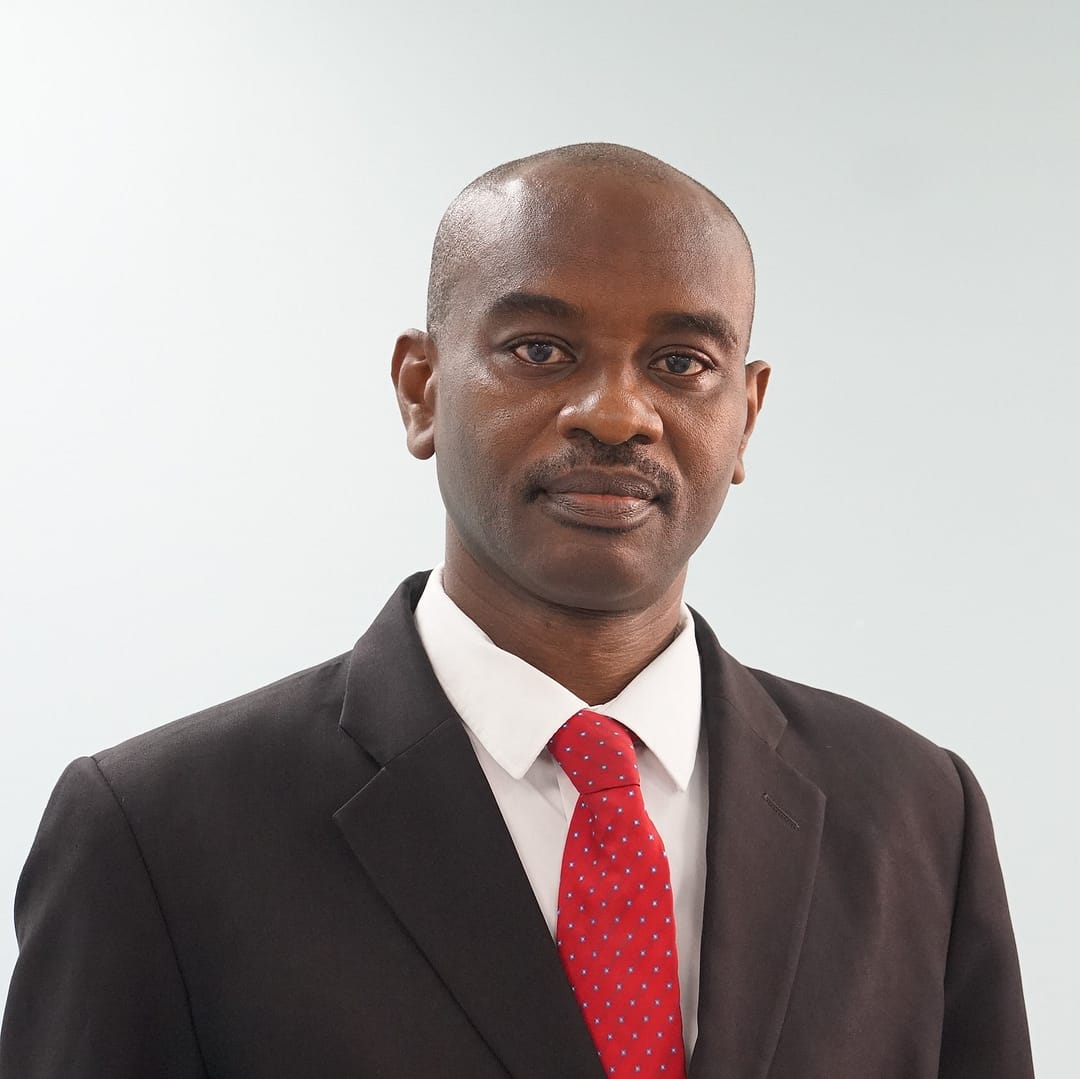
By Professor C. Justin Robinson
Pro Vice-Chancellor and Principal, The UWI Five Islands Campus
For decades, the IMF and World Bank advised, some say forced, Caribbean nations to privatize essential services. Now Washington is doing the opposite—does that change everything? When the United States government took a 10% stake in Intel this August—followed by equity positions in four other strategic companies—it wasn’t just another policy shift. It was the unmasking of one of international development’s most enduring deceptions: that free-market fundamentalism was ever about sound economics rather than geopolitical power. Caribbean nations watching this transformation have every right to feel vindicated—and furious.
The Double Standard Exposed
As of October 2025, the U.S. government now holds:
- 10% of Intel ($8.9 billion)
- 15% of MP Materials ($400 million)
- Dual 5% stakes in Lithium Americas
- 10% of Trilogy Metals ($35.6 million)
- A “golden share” giving President Trump veto power over U.S. Steel’s major decisions
Additionally, NVIDIA and AMD pay Washington 15% of their China chip revenues—what Commerce Secretary Howard Lutnick openly calls “rent.” National Economic Council Director Kevin Hassett described this as “a down payment on a sovereign wealth fund,” promising “many more cases.” This is precisely the state capitalism model Washington condemned for decades when practiced by China. When Chinese state-owned enterprises received government support, U.S. officials called it “unfair advantages” and “predatory financing.” But when America does it? It’s “industrial policy.” It’s “national security.”
The Caribbean’s Forced Experiment
The contrast with Caribbean experiences couldn’t be starker. Throughout the 1980s and 1990s, the IMF and World Bank made privatization a prerequisite for development assistance. By 2001, over 80% of World Bank water loans required cost recovery measures; 40% explicitly mandated privatization. Jamaica’s trajectory tells the story. After a 1990s financial crisis—partly caused by earlier IMF-mandated financial deregulation—debt reached 147% of GDP by 2013. Each rescue came with more demands: privatize airports, seaports, water systems. Sell state assets. Gut public services.
England’s experience with Thames Water cruelly exposes the potential costs of privatization. The result? £78 billion paid to overseas shareholders, £60 billion in accumulated debt, record sewage dumping, and now a £3 billion bailout request. Scotland, which resisted privatization, invested 35% more per household with lower bills and better service.
What This Reveals
Three uncomfortable truths emerge:
First, economic prescriptions imposed on developing nations were never about optimal policy. They served market access for Western corporations and geopolitical advantage. When U.S. strategic interests require state intervention—for semiconductors or steel—ideology bends instantly. But vulnerable island nations needing state capacity for water, healthcare, or disaster resilience were told such thinking was backwards.
Second, the double standard is structural, not accidental. The same institutions that forced Jamaica to privatize utilities remain silent as Washington takes equity stakes and exercises government control over private companies.
Third, free-market fundamentalism was always for export, not domestic consumption. As Wall Street Journal economics commentator Greg Ip observed: “Capitalism in America is starting to look like China.”
The Opportunity
This moment offers Caribbean nations and other developing countries crucial opportunities:
Recognize “technical advice” as power politics. When multilateral institutions controlled by wealthy nations prescribe policies they refuse to follow, it’s not economics—it’s colonialism with spreadsheets.
Embrace diverse models. Singapore’s government controls 37% of its stock market. South Korea and Japan developed through state-guided capitalism. Scotland’s public water outperforms England’s privatized system. There is no single path, regardless of what Washington preaches.
Prioritize resilience over ideology. For disaster-prone small islands, the question isn’t whether government should manage essential services—it’s how to structure involvement for maximum accountability and effectiveness. Climate vulnerability demands robust state capacity, not dismantled public sectors.
Build regional solidarity. Caribbean collective voices through CARICOM carry more weight than individual nations negotiating alone.
The fundamental issue isn’t state capitalism versus free markets—both can succeed or fail. What matters is accountability: who controls decisions, in whose interest, and with what consequences for failure? Thames Water’s offshore investors extracted billions while systems crumbled, facing no accountability. That’s the real scandal, whether in privatization or state control.
Reclaiming Policy Space
Washington’s pivot doesn’t automatically change power realities. The institutions dispensing loans with conditions remain controlled by wealthy nations. But intellectual liberation is the first step. Caribbean economists and policymakers should feel freer to now examine what actually works—Singapore’s state guidance, Nordic social welfare, Cuba’s public health achievements despite sanctions—without apologizing. They can ask: What does climate resilience require? What protects against disaster-induced debt spirals? What gives vulnerable nations maximum policy flexibility? The answers won’t fit tidy ideological boxes. That’s precisely the point.
If America can take stakes in strategic companies when it suits national interests, why can’t Caribbean nations maintain public ownership of essential services when it serves their populations. If Washington demands revenue shares from tech giants, why can’t small island states can structure economies to capture more value from tourism and natural resources.
The End of an Era
For decades, the United States positioned itself as the global champion of free markets, transforming lectures into loan conditions through the IMF and World Bank. Caribbean nations privatized assets, liberalized markets, and gutted government capacity—not because evidence suggested these policies would work for small island states facing unique challenges, but because refusing meant losing development finance.
Now the evangelist has abandoned the faith—while maintaining the pulpit. This isn’t just hypocrisy. It’s revelation: economic orthodoxy shifts with political convenience, proving it was never science but ideology serving power. The implications ripple beyond trade policy. When wealthy nations preach principles, they immediately abandon when convenient, developing nations owe it to their citizens to craft policies serving local needs and conditions, not distant geopolitical interests. The era of independent Caribbean economic thinking must have a rebirth—not in defiance of multilateral institutions, but in recognition that their prescriptions were never designed for small island survival.
The choice between state capitalism and free markets is a false binary. What matters is building resilient, accountable systems that work for your people. Washington’s U-turn finally makes that truth undeniable.
Prof. C. Justin Robinson, a Vincentian and UWI graduate, holds a BSc in Management Studies, MSc in Finance and Econometrics, and PhD in Finance. With over 20 years at UWI, he has served in various leadership roles, including Dean and Pro Vice Chancellor, Board for Undergraduate Studies. A Professor of Corporate Finance with extensive research publications, he is actively involved in regional financial institutions and is currently the Principal of The UWI Five Islands Campus in Antigua and Barbuda.