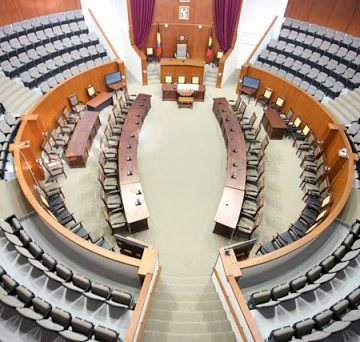
A parliamentary select committee met Tuesday to review new legislation aimed at tightening Antigua and Barbuda’s Citizenship by Investment Programme (CIP), including a major change that increases the residency requirement for new citizens from five days to 30 days over a five-year period.
Prime Minister Gaston Browne, who chaired the session, said the reforms are part of efforts to strengthen international confidence and align with global standards set by the United States, Canada, the United Kingdom and the European Union.
The changes follow months of regional consultation among countries offering similar investment-based citizenships.
Among the most significant updates is the introduction of biometric data collection for all new applicants, which will require new passport technology and the establishment of biometric centers across North America, Europe, Asia and Africa.
Existing CIP citizens will also be required to submit their biometric details when renewing their passports.
“There are some who argue that the requirement should be even longer,” Browne told the committee.
“But the reality is that many of these applicants are busy businesspeople who don’t have the time to spend weeks vacationing or engaging in extended stays.”
The reforms also include mandatory applicant interviews and enhanced due diligence through the Joint Regional Communications Centre (JRCC), designed to strengthen background checks and improve transparency.
Browne recommended that all member states within the Organisation of Eastern Caribbean States (OECS) operating CIP programs harmonize their implementation timelines to avoid opportunities for “arbitrage.”
He proposed that all five participating countries—Antigua and Barbuda, St. Kitts and Nevis, St. Lucia, Dominica, and Grenada—pass and enforce the new legislation by November 1.
The bill, which has already been endorsed by regional heads of government, is expected to complete its second and third readings in Parliament later this week, followed by Senate consideration next week.