Cuban Ambassador – By Deslyn A Joseph
Cuban Ambassador Denounces State
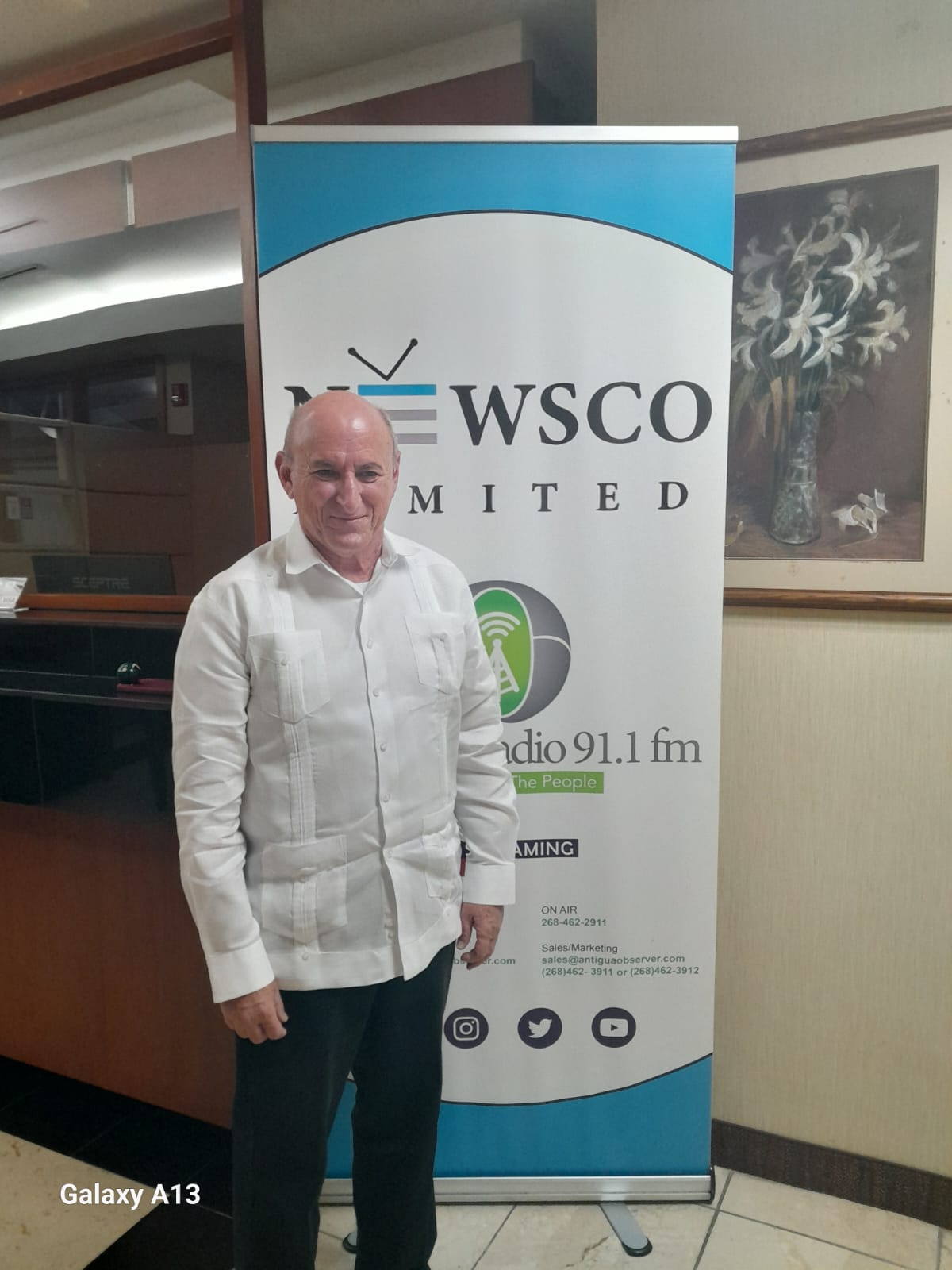
His Excellency Sergio Manuel Martínez González, the Ambassador of the Republic of Cuba to Antigua and Barbuda, has issued a searing condemnation of recent United States (US) foreign policy, characterizing the economic and political pressures against his nation and its allies as “acts of state terrorism.”
During an interview on Observer AM yesterday, the career diplomat and advocate for Caribbean integration addressed a series of escalating crises, from the removal of Nicolás Maduro in Venezuela to a tightening “fuel blockade” that has paralyzed basic services across the Cuban archipelago.,
Ambassador Martínez González drew sharp historical parallels, comparing the current US’ actions, specifically the January 29th executive order designating Cuba as a terrorist state to the “Hitlerian and Nazi” tactics of World War II.
“The US is utilizing a criminal economic blockade as a pretext to subjugate sovereign nations, kidnapping presidents and committing acts against people at sea without judicial trial. These measures, he asserted, are designed to drive the Cuban population into a state of desperation to facilitate a takeover by fascist groups in South Florida and return the country to its pre-1959 status as a big casino for US interests,” he stated.
The human cost of these geopolitical shifts was a central theme of the Ambassador’s remarks. He paid tribute to the 32 Cuban officers who recently fell in Caracas, including veteran Humberto Alfonso Roca Sánchez and Lieutenant Junior Estévez Samón. Martínez González described their resistance as part of a long lineage of Cuban internationalism, linking their sacrifice to those who fought against Spanish colonialism, the apartheid system in Africa, and past US invasions.
“This spirit of patriotism remains unbroken despite a blockade that now prevents even a single drop of fuel from reaching the island, leading to early school dismissals and severe power outages in hospitals and government businesses,” he noted.
Addressing the impact on healthcare, the Ambassador defended the Cuban Medical Brigade against what he called an “absurd and incredible campaign of lies” by the US. He noted that while Antigua and Barbuda is currently transitioning to medical teams from Ghana, the legacy of Cuban doctors and nurses is defined by bonds of friendship that cannot be destroyed.
He also clarified that in countries like Antigua and Barbuda, the collaboration is not a source of financial income but a humanitarian mission. Any resources gathered from wealthier nations are reinvested into Cuba’s universal free healthcare system, which is currently struggling to procure essential supplies, such as insulin, due to US sanctions that force Cuba to pay triple the market price for medicine.
Meanwhile, the Ambassador offered a direct update regarding the safety of the 5,000 foreign students currently in Cuba including Antiguans studying medicine and agriculture. While acknowledging that these students face the same hardships as the Cuban people, including electricity and food shortages, he confirmed that Havana has no intention of sending them home.
“The commitment to their education remains a point of national honour, and although the US can blockade oil and food, they will never be able to blockade the principle of humanism,” he assured.
Ambassador Martínez González reaffirmed that the Cuban Medical Brigade remains in Antigua and Barbuda at the request of the local government.
He added that if the day comes when the twin-island state decides it can provide for its own healthcare needs independently, the Cuban professionals will return home, taking with them nothing but the “love, friendship, and thankfulness” of the Antiguan and Barbudan people.