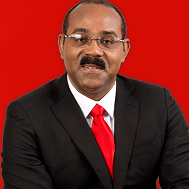
Prime Minister Gaston Browne has proposed that the United States provide approximately US$75,000 for every third-country national Antigua and Barbuda agrees to accept under a possible migrant transfer arrangement.
Browne Proposes 000 Per
Speaking during Tuesday’s parliamentary debate on the government’s White Paper, Browne stressed that the figure was tentative and would be subject to further negotiations and a detailed assessment of the expenses associated with accommodating each person.
“My understanding is that they have given between US$25,000 and US$50,000 to some countries per individual,” PM Browne told Parliament.
“I’ve said to them Antigua and Barbuda is an expensive country, so we may want to consider about US$75,000 per head.”
The proposed amount is equivalent to approximately EC$202,500 for each person accepted.
Browne said the government would quantify the likely costs before formally advising Washington of the amount it considers reasonable. He pointed to accommodation as one of the largest expenses, arguing that suitable housing could cost at least US$2,000 monthly.
“Rent in Antigua and Barbuda is not cheap,” the Prime Minister said, adding that the country’s comparatively high cost of living meant it should receive more financial support than lower-cost jurisdictions.
The payment would not simply represent compensation for accepting the individuals. According to the government’s proposed safeguards, the United States would be expected to cover accommodation, healthcare, welfare, security, administration, possible onward travel and any arrangements required to return a person.
Foreign Affairs Minister EP Chet Greene told Parliament that the financial responsibility would have to be settled before anyone left the United States and recorded in a binding written agreement.
“Antigua and Barbuda would not become responsible for the costs arising from another country’s immigration policy,” Greene said.
He insisted that the burden must not be transferred to local taxpayers through an informal promise or incomplete funding arrangement.
The proposed funding is one element of ongoing negotiations over a US request for Antigua and Barbuda to receive nationals of other countries who are being removed from American territory.
The government signed a non-binding memorandum of understanding with the United States in December 2025, but Browne said several versions of the subsequent operating procedures were rejected as unacceptable.
Under Antigua and Barbuda’s counterproposal, no person would be accepted automatically. Each case would require the government’s prior approval, while the country would retain the right to reject anyone without providing an explanation.
The government has also ruled out accepting people with serious criminal records, unaccompanied minors and individuals with unresolved asylum or protection claims. Immigration-related violations would be treated separately, particularly where an individual possesses skills needed locally.
Full medical, criminal, biometric and biographical information would have to be provided before any person is considered.
The United States had initially proposed the possible transfer of up to 10 people each month. Antigua and Barbuda rejected that proposal and countered with a maximum of 10 people for the entirety of 2026, followed by a complete review before any further arrangement is considered.
Browne made clear that the US$75,000 figure has not been agreed and that the Cabinet must retain sufficient flexibility to negotiate the final terms.