Farmers Stop – By Kisean Joseph
Farmers Stop Planting Waiting
Antigua and Barbuda’s farmers have stopped planting and are simply preparing their land, hoping rain arrives by September.
That shift is already under way in the fields, according to agriculture specialist Craig Thomas, of the Inter-American Institute for Cooperation on Agriculture (IICA). Growers are now aiming to plant around September or early October, targeting the tourist season, rather than sowing as usual at this time of year.
“Gone are the days where farmers would be planting at this time of the year. They have now reverted back to just preparing their lands, hoping that rain will come in September, October, November,” Thomas said.
He warned that if the El Niño forecast holds, the coming months will be defined by water management rather than yield, given the country’s limited water resources.
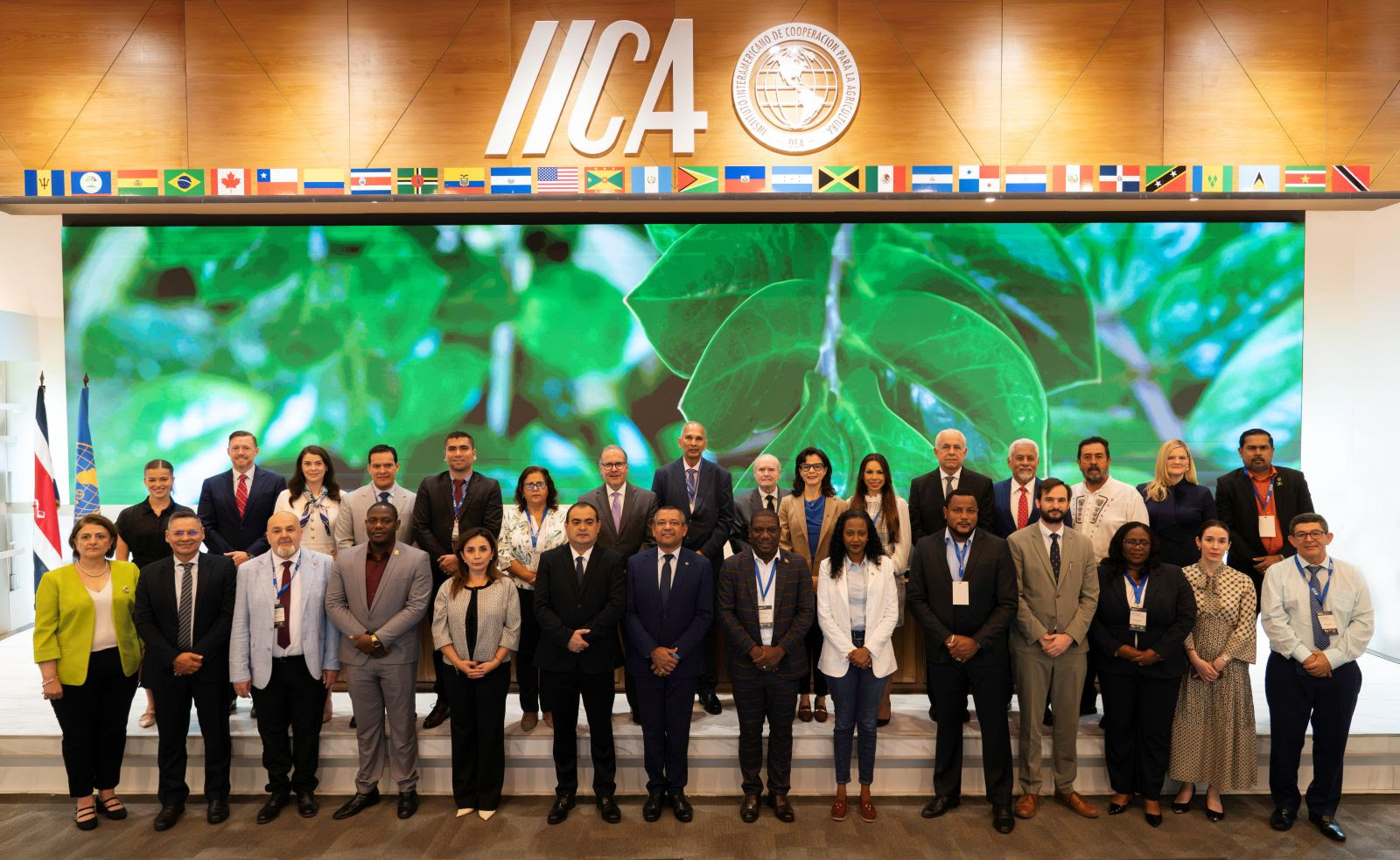
The warning follows a resolution approved by agricultural ministers meeting in San José, Costa Rica, tasking IICA with coordinating a response across its 34 member states. This includes updating action plans, sharing successful approaches, and promoting knowledge exchange between countries. The Institute’s technical assessment named the eastern Caribbean among the regions facing greater risk of heat, irregular rainfall and water shortages under El Niño.
Thomas said IICA had already offered the government technical support and training on managing water and soil. He argued the country must go further, cleaning its waterways and installing systems to trap run-off before it reaches the sea.
“I’m a firm believer that with all our waterways, every year the water flows back to the sea. So I think that we have to devise a plan to trap the water that goes through these streams, similar to what is happening at Big Creek,” he said.
On early warning, Thomas pointed to the Meteorological Office, saying meteorologist Dale Destin continued to issue advisories and kept close contact with farmers on what to expect.
Regionally, IICA said almost 30 per cent of member countries had already made concrete requests for technical cooperation linked to El Niño, with roughly 80 per cent expected to seek support within six months. Those requests fall into three areas: risk monitoring, production recovery, and water resource management. The last of these covers irrigation, water harvesting and watershed infrastructure, all directly relevant to a country that struggles with water supply even in ordinary years.
Hugo Chavarría, manager of IICA’s Innovation and Bioeconomy Programme, said the sharpest effects would land where vulnerability meets weak capacity, “especially among small-scale farmers,” a description that fits most of Antigua and Barbuda’s agricultural sector.
Curt Delice, IICA’s director of operations and regional integration, said preparation could not wait for the emergency itself. “Acting on time will reduce losses and costs,” he said, adding that no single country could manage the challenge alone.
IICA said the region was not starting from scratch, having identified 88 initiatives already running across the hemisphere on climate resilience and adaptation, of which 25 contribute directly to El Niño preparedness.