Browne Defends – Algernon Watts
Browne Defends Saab Appointment
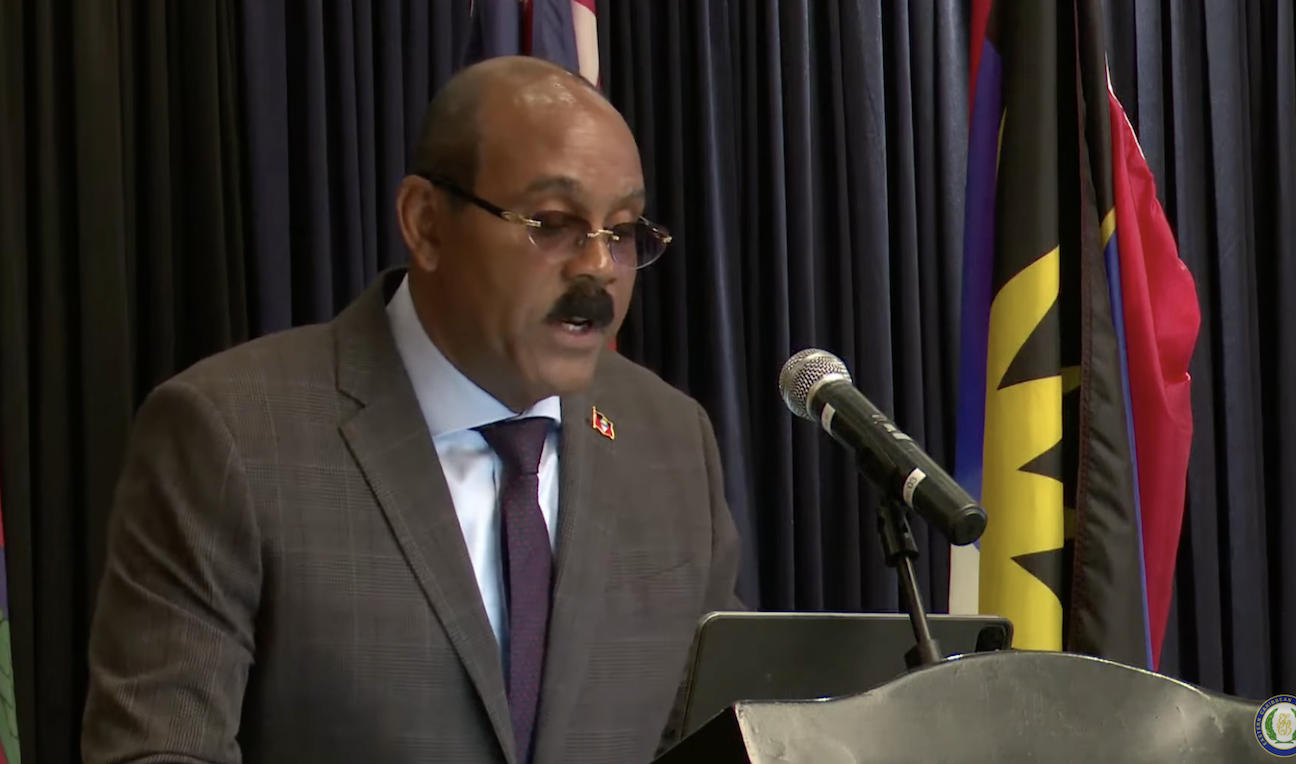
Prime Minister Gaston Browne has defended his government’s appointment of controversial Colombian businessman Alex Saab as an economic envoy, saying countries sometimes select people in good faith who later “turn out to be crooks”.
But the admission places renewed focus on the government’s own responsibility for choosing, vetting and empowering foreign nationals to represent Antigua and Barbuda.
Saab was appointed an economic envoy under the Browne administration, given Antigua and Barbuda diplomatic credentials and involved in a government-backed housing initiative before the relationship was eventually terminated.
Browne maintained that Saab’s appointment was legitimate when it was made.
“That was a genuine appointment,” he said.
“At the time, you know, there was no issue on him.”
Browne then added: “There are times when countries do appoint individuals and then they turn out to be crooks.”
The statement goes to the heart of a longstanding issue surrounding Antigua and Barbuda’s use of foreign businessmen as economic envoys, ambassadors and diplomatic passport holders. How much scrutiny should take place before the country places its name and diplomatic standing behind an individual?
In Saab’s case, the government did far more than simply give him an honorary title. His Antigua and Barbuda diplomatic passport was issued on 18 November 2014, less than six months after the Browne administration took office.
Browne said Saab was brought into a proposed trade arrangement with Venezuela and was expected to participate in a major housing development in Antigua and Barbuda.
He said that, ahead of the appointment, then minister Michael Browne travelled to Venezuela to inspect Saab’s housing operation and subsequently reported positively to Cabinet.
The government later made approximately 100 acres of land available for the project.
According to Browne, roads were cut and several two-storey houses constructed before the initiative stalled.
“After he got into some issue with the US, we revoked his citizenship and we took back the land,” Browne said.
The chronology, however, complicates that explanation.
By the time Saab received Antigua and Barbuda diplomatic credentials, his business network had already been the subject of a formal money-laundering investigation in Ecuador.
Authorities there had examined millions of dollars in transactions linked to Foglocons, alleging major discrepancies between the value of goods purportedly exported to Venezuela and the amounts actually paid to suppliers.
Later Ecuadorian investigations and parliamentary reviews continued to scrutinise those transactions and the movement of funds through the SUCRE system.
Saab’s diplomatic passport and accreditation were eventually cancelled as his international legal problems intensified.
He later became one of the most controversial figures associated with the Venezuelan government, facing sanctions, arrest, extradition and criminal proceedings in the United States.
He has denied wrongdoing in proceedings against him, and the latest charges remain before the courts.
But Antigua and Barbuda’s role in his rise as an international representative remains politically relevant because the government itself selected him and gave him the authority associated with representing the country abroad.
Browne’s explanation that some appointees later “turn out to be crooks” therefore raises a wider question about where responsibility lies when diplomatic vetting fails to identify risks before an appointment is made.
The Citizenship by Investment Unit also sits within that broader debate.
The CIU is responsible for administering citizenship applications under the investment programme and coordinating due-diligence checks on applicants.
The stakes now extend beyond the reputation of the programme itself. The US State Department specifically identifies Antigua and Barbuda as operating a citizenship-by-investment programme through which foreign nationals can obtain citizenship and a full-validity Antigua and Barbuda passport, and notes that holders may be required to provide additional documentation to satisfy US consular officers about their identity and nationality.
Antigua and Barbuda has also been caught up in wider US visa restrictions, while European authorities have strengthened mechanisms that could ultimately threaten visa-free travel where investor-citizenship programmes are deemed to pose security or migration risks.
That means scrutiny of the CIU and the quality of its due diligence is no longer an abstract governance issue. Any loss of confidence in the country’s citizenship and passport system has the potential to affect ordinary Antiguans and Barbudans who rely on visa access to the United States and visa-free travel to Europe.
Citizenship provides legal membership in the state. Diplomatic appointment gives an individual the ability to act in Antigua and Barbuda’s name and can carry significant reputational consequences when the appointee becomes embroiled in controversy.
Saab demonstrates what can happen when those systems fail to protect the country from reputational risk.
When such an appointment goes wrong, the reputational damage is not confined to the individual. Antigua and Barbuda’s name, passport and diplomatic system become part of the controversy.
Browne is now promising greater transparency.
He said the government will publish a new breakdown of existing diplomats identifying which are local Antiguans, which are CIP citizens and which hold diplomatic passports.
“I’m giving an undertaking now that I’m gonna process the list of existing diplomats, and we’ll indicate if they’re local Antiguans, if they’re CIP citizens, if they have a passport,” he said.
No date has been announced for publication of that information.
The Saab episode, however, leaves a larger issue than disclosure alone.
The government made the appointment, granted the diplomatic standing and then facilitated the proposed investment.
And when that relationship eventually collapsed, Antigua and Barbuda was left dealing with the consequences.
Browne’s proposed reforms now raise the question of whether the existing system has placed too much faith in government judgment and too little independent scrutiny when deciding who gets to represent the country abroad.