Lula Wins – A fourth term preserves Brazilâs independent diplomatic course. A dispute over extended voting hours tests its institutions and the response of foreign governments.
At two bars facing each other in Copacabana, Brazilâs election result produced sharply different endings to the evening. Lulaâs supporters sang and jumped in celebration. Across the road, Bolsonaro voters paid their bills and left, shaking their heads, The Associated Press reported.
The scene captured something the national count could settle only in part. Luiz Inácio Lula da Silva had won another presidential term. The divisions that shaped the campaign would survive it.
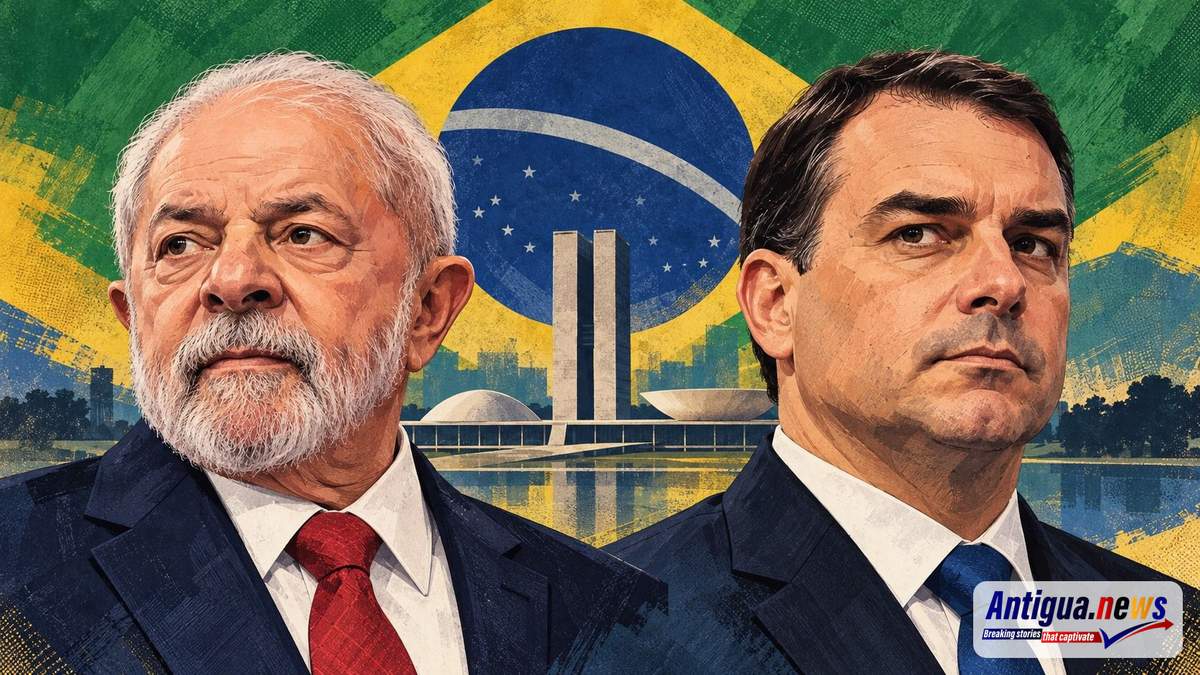
Brazilâs Superior Electoral Court announced that Lula received 51.79 percent of valid votes in Sundayâs runoff, against 48.21 percent for Senator Flávio Bolsonaro, a margin of more than 4.4 million votes. The October 25 victory gives Lula an unprecedented fourth term. His opponent, the eldest son of former President Jair Bolsonaro, said he would seek to have the result annulled over a judicial decision extending voting by two hours.
For Brazilâs international partners, the immediate question is whether its institutions can resolve that dispute with enough transparency to sustain public confidence. Beyond it lies a larger question: how much authority Lula can carry abroad while governing a country so closely divided at home.
The circumstances warrant scrutiny. Both campaigns sought additional voting time in particular places after transport difficulties and severe weather disrupted access to polling stations. Supreme Court Justice Cristiano Zanin ordered a nationwide extension, but the decision reached many polling places after they had closed. Subsequent clarification left already closed machines shut and extended voting at stations still operating, according to Folha de S.Paulo.
The electoral courtâs own account acknowledged that thousands of machines could no longer be reopened and that the disruption required changes to the processing of results. The court nevertheless completed the count and announced Lulaâs victory.
Those facts call for a precise explanation: which stations remained open, which voters were affected, and what consequences followed. Public confidence will depend on evidence detailed enough to answer such questions. Declaring the process successful leaves the underlying administrative controversy to be addressed.
Bolsonaroâs own request for extra time complicates his political argument, although a request for local relief and a nationwide intervention raise different questions. The consequences of the uneven extension need to be established. An announced annulment bid, at this stage, records the losing candidateâs objection; the authorities have declared Lula the winner.
The result of Brazilâs 2026 election also reveals the durability of Lulaâs political appeal. In the first round, Flávio Bolsonaro led him by more than 2.2 million votes. Lula reversed that deficit in the runoff, while abstention fell to about 19.2 percent from 21.08 percent, according to the electoral courtâs figures.
The victory leaves Lula with difficult arithmetic in Congress. Reuters reports that the new Congress is Brazilâs most conservative since its return to democracy, giving the opposition substantial power over spending and legislation.
Lula will need agreements with politicians whose voters rejected him. Every negotiation over social spending, investment or fiscal restraint will test whether the coalition that returned him to office can become a coalition capable of governing. Foreign counterparts will weigh that capacity when assessing what he can promise.
The Bolsonaro name adds historical weight to the dispute. Antigua.news covered Jair Bolsonaroâs challenge to his defeat in 2022. That memory helps explain the sensitivity surrounding his sonâs refusal to concede, while leaving the present complaints to be examined on their own facts.
Before the runoff, foreign diplomats in BrasÃlia were already discussing rapid recognition of the eventual winner, Reuters reported. Their concern was that premature declarations by outside leaders could damage confidence in the official result. No coordinated plan had been finalized.
Congratulatory messages have since arrived from leaders including Mexicoâs Claudia Sheinbaum, Paraguayâs Santiago Peña and Uruguayâs Yamandú Orsi. They provide an early indication that governments with different political outlooks are prepared to work with the declared winner.
Such messages have practical significance during a contested election. They establish whom governments expect to negotiate with and lend weight to the institutions responsible for the count. Recognition can coexist with proper examination of specific complaints. Foreign capitals should be able to support both an authoritative result and a transparent explanation of how it was reached.
Washington, Beijing and Brazilâs room to maneuver
Lulaâs reelection also preserves a diplomatic approach built around diverse partnerships. His campaign platform emphasized regional integration, South-South cooperation and BRICS, while Flávio Bolsonaro placed greater weight on ties with Washington, according to an analysis published by Kingâs College London.
Chinaâs position as Brazilâs largest trading partner gives that debate an economic foundation. Exporters, investors and industries have interests that extend well beyond a presidentâs ideological sympathies.
Lulaâs task will be to turn those relationships into bargaining power. Cooperation with Beijing needs to deliver investment and productive capacity; negotiations with Donald Trumpâs administration will demand attention to trade, security and sovereignty. Relations with Europe offer another avenue for commerce and diplomacy. A prolonged domestic confrontation would consume the time and credibility required for all three.
The promise of an independent foreign policy will therefore be judged by its results: whether Brazil attracts investment on useful terms, protects access to markets and helps shape decisions beyond its borders. Electoral survival gives Lula time to pursue that ambition. The difficulty of governing will determine how far he gets.
Why Lulaâs victory matters for the Caribbean
For Antigua and Barbuda and its CARICOM partners, the stakes are concrete. At the June 2025 Brazil-Caribbean summit, leaders set out a cooperation agenda covering food security, climate action, energy transition, disaster preparedness and regional connectivity.
As Antigua.news reported at the time, Prime Minister Gaston Browne used the meeting to press for closer engagement, climate financing and better transport links. Lulaâs reelection gives Caribbean governments an opportunity to pursue those commitments with a familiar counterpart.
The next measure of that relationship will be delivery: more reliable food supplies, workable connections and financing that vulnerable states can actually obtain. Small countries gain little from diplomatic warmth if promised cooperation remains on paper.
Lulaâs victory keeps that agenda within reach. His ability to advance it, and his broader international ambitions, will depend on what follows at home. Brazilâs partners will watch how its courts handle the complaints, how the opposition responds to their findings, and whether the president can build agreements with a country that has again given him power without giving him consensus.
This story was first published by Antigua News on :
antigua.news/2026/10/26/brazil-election-2026-lula-victory-bolsonaro-challenge. © 2026 Antigua News. Republication without permission is not allowed.
An alert the moment we publish, for the sections you choose. Stop them any time.
You get alerts for the sections ticked below. Change them any time.
It takes one minute. We show you every tap, step by step.
You are reading inside another app (Instagram, Facebookâ¦). Tap ⯠at the top right and choose Open in Safari (or Open in browser).
No such option? Copy the link, open Safari and paste it in the address bar.
Alerts need iOS 16.4 or newer. Open Settings â General â Software Update and install the update. You can still add the icon now: tap Next.
It is at the bottom right of Safari, next to the address bar. Don’t see the bar? Scroll up a little.
It is the first option of the menu, with a square-and-arrow icon.
The square with an arrow pointing up, in the middle of the bar at the bottom (on iPad: at the top right).
The square with an arrow, at the right of the address bar at the top. (Firefox: tap â° at the bottom, then Share.)
Scroll down the list to find it (icon: a square with a +). Not there? Tap Edit Actions or View More at the bottom.
The switch must be green â without it, alerts can’t work. Then tap Add at the top right.
At the top right. If you see an Open as Web App switch, leave it on (green).
Close the browser and open Antigua.news from its new icon
Go to your Home Screen: the Antigua.news icon is there now (swipe left if you don’t see it). Alerts only work when you open us from this icon.
In the app you will see a red box asking to turn on alerts: choose your sections, tap the button, then tap Allow. That’s it â breaking news will reach you even with the phone locked.
Dr. Dario Item is the Head of Mission of the Embassy of Antigua and Barbuda in Madrid. He is an experienced financial crimes lawyer with nearly 30 years of practice. He holds degrees in law and political science, a Ph.D. in criminal law and an LL.M. in transnational financial crime.
Read our editorial standards
and corrections policy.
Spotted an error? Contact the newsroom.