Barbados Shutout – By Kisean Joseph
Barbados Shutout Warning Sign
For the third consecutive election, the Barbados Democratic Labour Party has been wiped from parliament without winning a single seat — and Antigua and Barbuda’s United Progressive Party says the lesson from Bridgetown is one the local political landscape cannot afford to ignore.
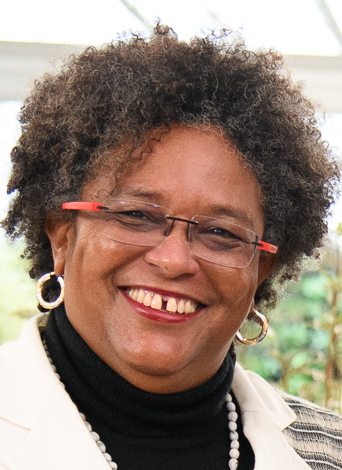
Barbados held general elections on February 11th, returning Prime Minister Mia Amor Mottley and the Barbados Labour Party to government in another clean 30-nil sweep — mirroring identical outcomes in 2018 and 2022. The result means Barbados has now gone nearly a decade without a functioning parliamentary opposition, a reality that has unsettled even some supporters of the governing party.
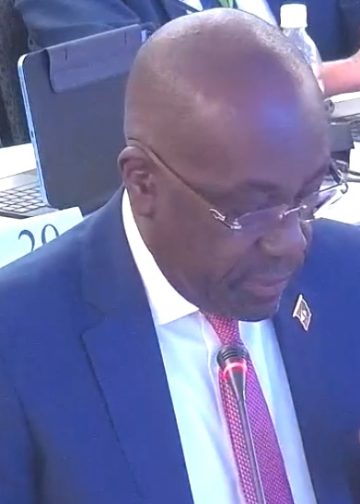
UPP’s Acting PRO Jonathan Whenner, who was in Barbados during the election, told Observer Friday morning that the mood among the electorate reflected a contest many felt was already decided.
Whenner traced the DLP’s sustained collapse to deep internal divisions that took hold the moment the party lost government in 2018 and were never resolved. He noted that the party’s leadership instability — including the controversial replacement of former political leader Dr. Ronnie Yearwood with Ralph Thorne KC, a sitting government MP who crossed the floor — only deepened those fractures.
“Since the Democratic Labour Party lost government, there were massive divisions throughout their time in opposition, and they really and truly have not been able to catch themselves since,” Whenner said. “Opposition parties must be united if they are to win government. That is a lesson for all of us to learn, even as we apply it locally.”
Beyond internal divisions, Whenner said, political analysts on the ground identified a second fatal flaw, the DLP never gave voters a credible vision of what an alternative government would look like.
The party released its manifesto just three days before polling day, and its campaign was widely characterized as one built on grievance rather than governance.
When asked directly whether Antigua and Barbuda’s UPP risked falling into the same trap, Whenner pushed back firmly. He cited a range of policy proposals he says the party has advanced for years, including minimum wage increases, a national road rehabilitation plan, rent-to-own housing initiatives, and ABST relief during the back-to-school and Christmas shopping seasons. He also alleged that several UPP proposals were later adopted by the ruling Antigua Labour Party, only to be abandoned after taking office.
“The United Progressive Party, we have for years been proposing solutions,” Whenner said. “Increasing the minimum wage was one of our main campaign promises. The government said they’re going to have a review.
It’s been about three years now, and I still haven’t heard any updates.”
The question of a UPP convention also surfaced. Whenner said the decision rests with the party’s General Council but noted it is normal UPP practice to avoid conventions when an election is considered imminent — a signal some observers may read as the party anticipating an early vote.