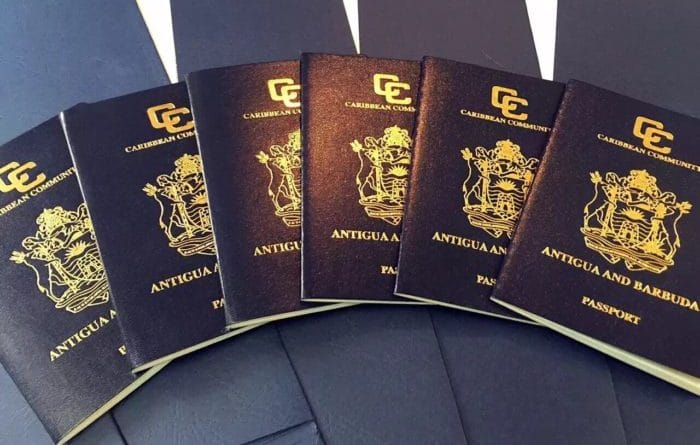
Antigua and Barbuda is among five Caribbean states named as operating what the EU describes as “large-scale” programmes, alongside Dominica, Grenada, Saint Kitts and Nevis, and Saint Lucia.
The Commission says these schemes present a “significant and ongoing challenge” to EU border security.
More than 100,000 citizenships have been issued across the five countries.
The report notes that Antigua and Barbuda has a rejection rate of about 1.7%, which it says raises concerns about the strength of screening processes.
Regional governments have introduced reforms, including a minimum investment threshold of US$200,000, enhanced due diligence and greater information sharing.
However, the Commission says these measures do not remove the risks and insists stricter checks must continue while the programmes remain in place.
Under revised rules, the EU can begin a staged process that could lead to visa-free access being suspended. The Commission points to Georgia, where diplomatic visa-free travel is due to be removed, as an example of how sanctions could be applied.
Citizenship-by-investment revenues play a key role in Antigua and Barbuda’s economy, helping to fund infrastructure, debt reduction and climate resilience projects. Any loss of visa-free travel could reduce investor demand and affect public finances.
The report reiterates that closer integration with the EU is incompatible with investor citizenship schemes, citing a recent European court ruling against Malta’s programme.
While no timeline has been set, the Commission says further action could follow. Caribbean governments are expected to defend the programmes, arguing they support development and meet international standards.