Where do Caribbean migrants come from? Across CARICOM, the answer depends on where you’re standing.
Data from the IOM’s latest migration report, drawing on UNDESA mid-year 2024 estimates, reveals distinct patterns shaping each country’s migrant population. Some are defined by movement within the region. Others reflect the spillover of crises beyond their borders.
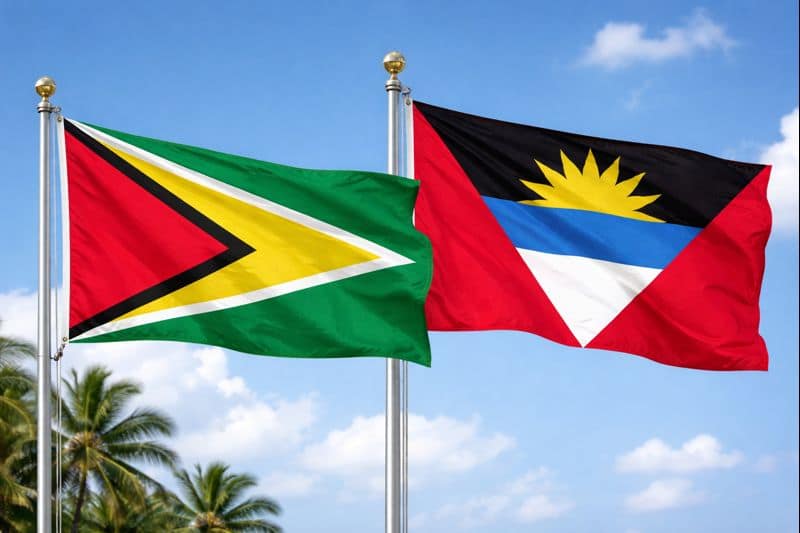
Intra-Caribbean migration remains a powerful force. Guyanese nationals are the top migrant group in five CARICOM countries – Antigua and Barbuda, Barbados, St. Lucia, Suriname, and St. Kitts and Nevis. Trinidadians, meanwhile, are the leading group in Grenada and St. Vincent and the Grenadines. This is Caribbean people moving within the Caribbean, often following economic opportunity and family ties.
But proximity to regional instability has reshaped migration in other parts of the bloc. In Guyana, 75% of migrants are Venezuelan – a figure that reflects years of crisis-driven movement across the border. Trinidad and Tobago shows a similar pattern, with Venezuelans comprising 30% of its migrant population. In The Bahamas, Haitians account for 26% of migrants; in Dominica, 31%.
Not every country fits these patterns. Belize’s migrant population is shaped by Central America – Guatemalans (43%), Salvadorians (16%), and Hondurans (16%) make up the majority. Jamaica’s top origin country is the United States (13%), followed by the United Kingdom, suggesting return migration and diaspora ties rather than regional movement.
The data paints a picture of a region shaped by overlapping forces: free movement frameworks, geographic proximity, economic pull factors, and displacement from neighbouring crises.
Source: IOM Displacement Tracking Matrix, Migration Trends in the English and Dutch Speaking Caribbean, 2024 (using UNDESA mid-year 2024 data)