Hesse Dismissal – By Tahna Weston
Hesse Dismissal Exposes Policy
The removal of Antigua and Barbuda’s Ambassador to the African Union has ignited a wider conversation about how the nation’s diplomatic representatives conduct themselves while serving in official capacities.
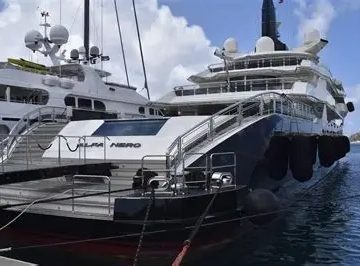
Ambassador Johann Hesse was relieved of his duties following court filings in the Alfa Nero superyacht case that revealed a US$450,000 commission payment connected to the 2024 sale of the superyacht.
According to government’s Director General of Communications, Maurice Merchant, the payment went to a company registered in the United Kingdom and owned by Hesse’s business partner, Rufus Gobat, who joined the Cabinet meeting on Wednesday, February 11, via video link from the UK. Gobat reportedly told the Cabinet the commission was declared and taxes were paid in the United Kingdom.
The commission was earned, according to the Cabinet, after the company successfully secured a buyer during the initial phase of the bidding process, before the original winning bidder pulled out, necessitating a fresh search for a purchaser.
Former diplomat and Investment Authority chairman Dr McChesney Emanuel, who served as ambassador to New York, said the case is not an isolated one. He argued it reflects a pattern among Antigua and Barbuda’s diplomatic appointments that has long gone unchecked.
“I find it quite troubling that we have too many of these people who are running around, not only as ambassadors, but CIP agents, and they seem to just (be) taking advantage of their positions and taking advantage of our people and this needs to stop. Many of them have diplomatic passports, and they’re causing us more headache than anything else,” Emanuel said.
Hesse allegedly held dual roles as both a Citizenship by Investment (CIP) agent and a non-resident ambassador, a common arrangement for a small nation unable to maintain physical embassies worldwide. Dr Emanuel said that arrangement comes with specific responsibilities that should not be compromised by personal financial pursuits.
“There is a conflict of interest right away here because, is it you are using your position to advance your own interests and to make money? Or is it that you are in the business of being a diplomat and an ambassador? You should be actually interacting with the many, many countries in Africa for which we would want to engage and to ensure that we can have economic cooperation and cultural exchanges and different areas where we could find cooperation. That should be your role,” the former ambassador said.
The case has also brought into focus the absence of clear protocols requiring ambassadors to disclose business dealings to supervising officials.
Dr Emanuel, who said he filed financial declarations annually during his own tenure, noted enforcement has historically been inconsistent.
“The way that this developed, it again begs the question as to what kind of policy we have in place governing how ambassadors and diplomats and envoys are supposed to conduct themselves when they have been appointed as officials of the government and people of Antigua and Barbuda. The fact that he did not report, he did not actually let his minister, his permanent secretary and others in the government (know) that he was involved and that he did receive compensation from this, then I find it troubling. It’s not acceptable,” Dr Emanuel said.
Meanwhile, the Member of Parliament for St Phillip South, Sherfield Bowen, added a further complication, noting that if the transaction generating the $450,000 occurred in Antigua, where the yacht sale was conducted, taxes should have been paid locally rather than in the United Kingdom.
Bowen said the discrepancy suggests the commission arose from a transaction separate from the official $40 million sale, raising additional questions about the full scope of financial dealings surrounding the Alfa Nero disposal.