Another Wall of Secrecy: the Collapsed Bank and the Swiss Financial Regulator Stretch “Legal Privilege” to Keep AT1 Files in the Dark
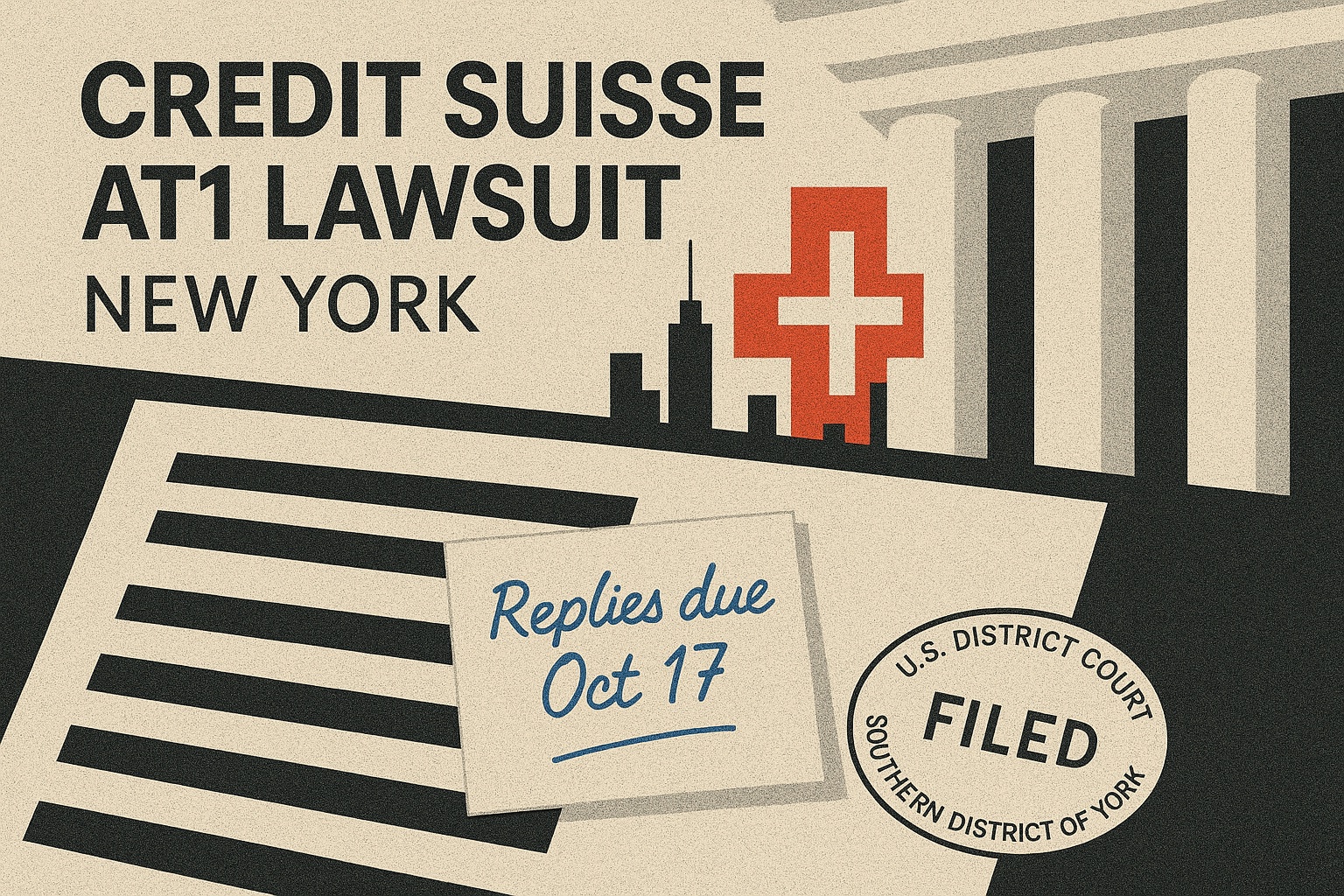
The secrecy fight over Credit Suisse’s AT1 wipeout is not theoretical; it is unfolding inside a live class action pending in the U.S. District Court for the Southern District of New York. In July 2025, the court allowed the AT1 bondholder case to move into discovery—opening the door to internal emails, risk reports, and board communications about the March 2023 decision that zeroed out roughly CHF 16 billion of bonds.
Within that same litigation, a fresh filing shows how the discovery phase is already running into a familiar roadblock: Credit Suisse has been withholding or heavily redacting documents by invoking Swiss privacy laws, “blocking statutes,” and an asserted supervisory privilege. The judge’s handwritten instruction sets a briefing schedule with all replies due by October 17, 2025.
New York: secrecy repackaged as “privilege”
In a September 2025 letter to Judge Colleen McMahon, counsel for investor Ali Diabat warns that key evidence is being withheld under the banner of Swiss secrecy rules and a Swiss supervisory privilege. Plaintiffs argue those claims are overbroad—especially because the Swiss Parliamentary Investigative Commission has already put the substance of several FINMA communications into the public record, weakening any blanket confidentiality rationale. The letter asks the court to prioritize U.S. discovery principles over foreign blocking statutes in this U.S. securities case.
Plaintiffs also press the judge to decide the dispute directly, rather than send it to a magistrate, noting that a referral could simply invite another round of objections and delay.