Trinidad PM Tells Antigua’s Browne to Explain U.S. Visa Restrictions, Accuses CARICOM of Backing Maduro
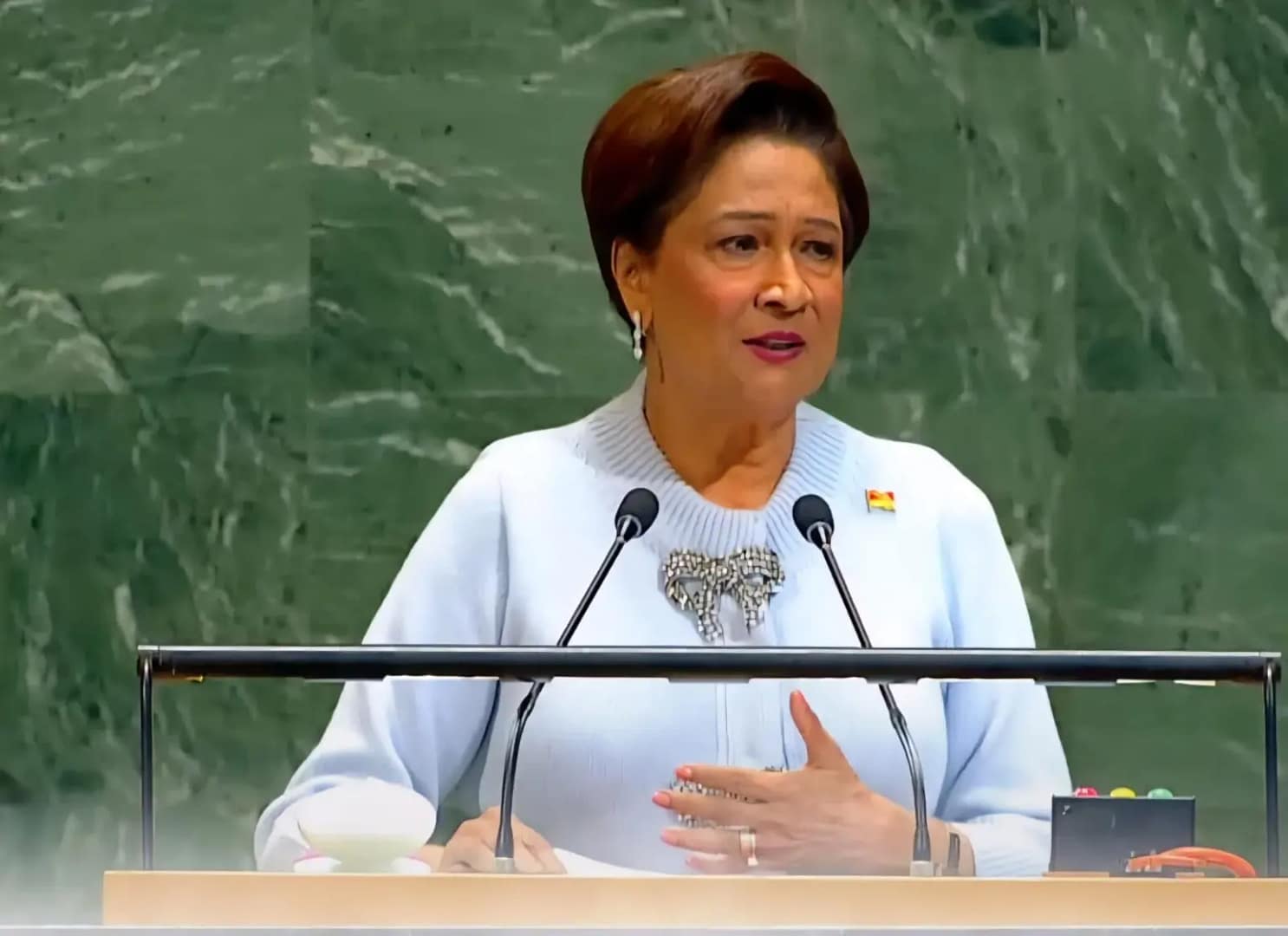
Trinidad and Tobago Prime Minister Kamla Persad-Bissessar on Saturday told Antigua and Barbuda Prime Minister Gaston Browne to focus on explaining to his citizens why their U.S. visas were restricted, as she sharply criticized the Caribbean Community for what she described as alignment with Venezuela’s government.
In a statement posted on social media, Persad-Bissessar said Browne and Antigua and Barbuda’s ambassador to Washington, Ronald Sanders, should “worry less about my comments” and instead address the reasons behind the U.S. decision to impose partial entry restrictions affecting Antigua and Barbuda.
Her remarks formed part of a broader attack on CARICOM’s stance toward Venezuela, which she said amounted to support for dictatorship and drug trafficking under the bloc’s “zone of peace” policy.
“Trinidad and Tobago wants no part of that alignment,” Persad-Bissessar said, accusing CARICOM of aligning itself with Venezuelan President Nicolás Maduro, whom she alleged has imprisoned or killed thousands of political opponents.
She argued that the “zone of peace” narrative is a façade designed to push the American military out of the Caribbean region, thereby enabling Maduro to remain in power.
Persad-Bissessar also cited long-standing territorial tensions between Venezuela and Guyana, saying Caracas has threatened to invade Guyana for years and has recently made statements implying that Trinidad and Tobago is part of Venezuela.
Despite those threats, she said, CARICOM has chosen to support the Maduro government rather than confront what she described as regional security risks.
“My priority is in the best interests of the citizens of Trinidad and Tobago,” Persad-Bissessar said.
CARICOM has not issued an immediate response to the statement. The bloc has traditionally promoted the Caribbean as a “zone of peace,” emphasizing dialogue and non-intervention as guiding principles of regional diplomacy.
Persad-Bissessar’s comments are expected to heighten tensions within CARICOM at a time when relations with the United States and concerns over regional security remain under strain.