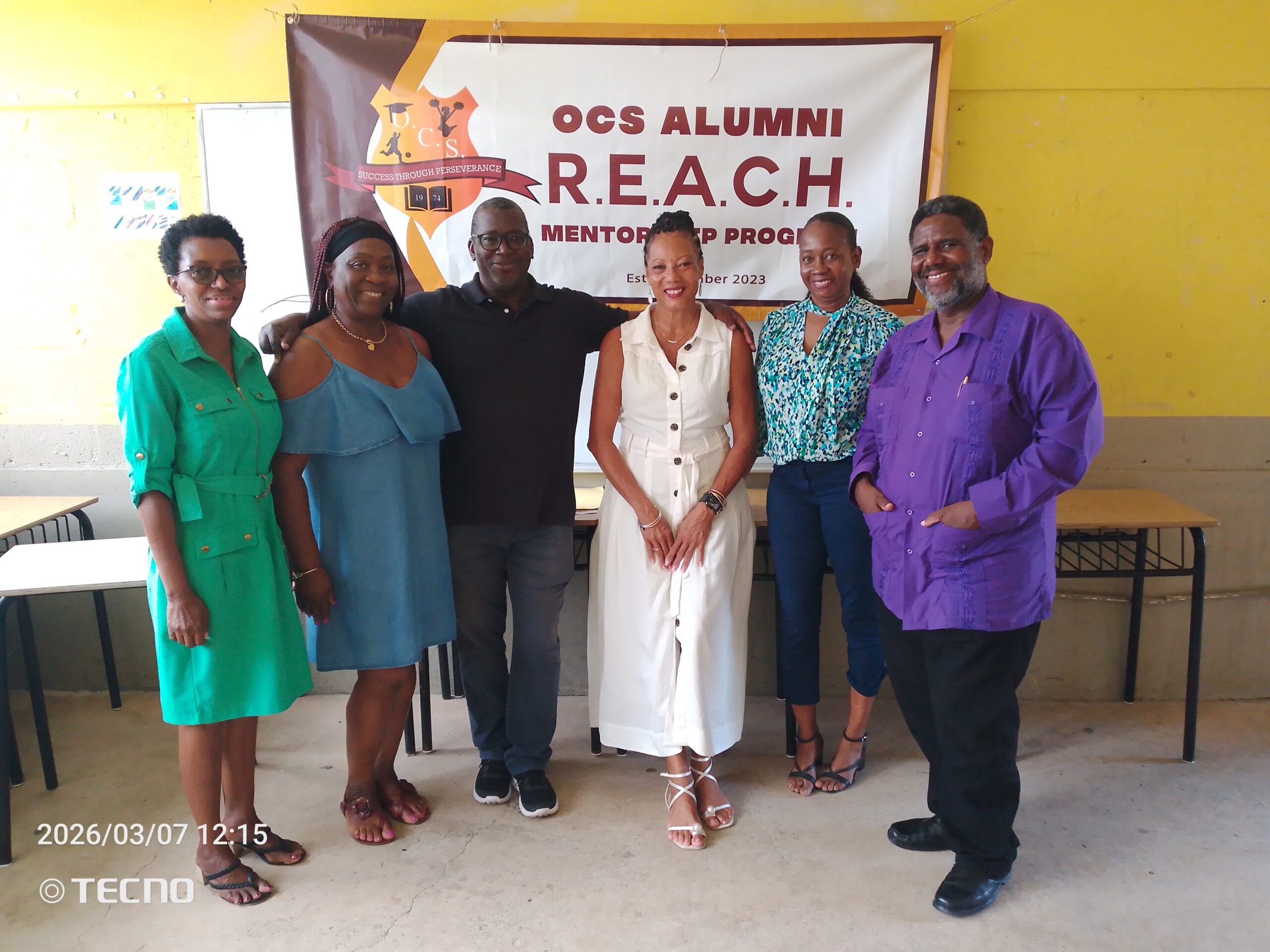
The closing ceremony for the Vision Map Workshop, a program targeting developing youth, which commenced on 14th January and spanned nine weeks, was held on Saturday, 7th March at Ottos Comprehensive School.
Vision Map Workshop Closing
The initiative was the brainchild of Antiguan and Barbudan born psychologist, Dr. Dona Gudger, who resides in the USA.
Dr. Gudger partnered with the Ottos Comprehensive School’s REACH Mentorship Program to deliver this profoundly engaging workshop for more than a dozen young people, most of whom attend the Ottos Comprehensive School.
The workshop is another example of the collaboration of the REACH Mentorship team’s partnership with others to expose students to positive life-changing experiences.
The REACH Mentorship team is exceedingly grateful to Dr. Gudger, along with others whose contributions ensured the success of the Saturday sessions. In this regard, the team salutes Foster Roberts, the school’s principal; Karen Germain, a counselor at OCS; and Cindy Price, a social worker in the Ministry of Education, along with members of the REACH Mentorship team who volunteered during the workshop, namely Lyndell Francis Butler, Thomasine Henry, Anthony Spencer, Wendy Hazelwood Silencieux (secretary), and Linley Winter (chairperson).
In recognizing their contributions, the Mentorship team also extends gratitude to the following sponsors: Agrippa and Associates, Samir Doumith, and SkyTiger Services.
The goal of the Vision Map Workshop is to support adolescents during one of the most critical developmental stages of their lives, i.e. identity formation. The workshop therefore focused on three key pillars designed to target and correct disengagement, emotional reactivity, or a lack of direction.
1. Who they are now
2. What has shaped them, their roots, and foundational experiences.
3. Who they want to become as they transition into adulthood.
Through structured activities and reflective dialogue, students were able to build a personal vision map that connects identity, experience, and future direction.
This pilot was designed to ground their identity, making future planning intentional rather than reactive. When students recognize that adolescence is preparation for adulthood and that the choices they make now shape their future, they are given the tools to approach their decisions with greater intention.