Wildlife Already – By Kisean Joseph
Wildlife Already Attracting Visitors
Antigua and Barbuda’s unique wildlife is drawing international visitors who travel specifically to see species found nowhere else on earth, but a leading conservationist says the country has yet to fully capitalise on what its natural heritage offers.
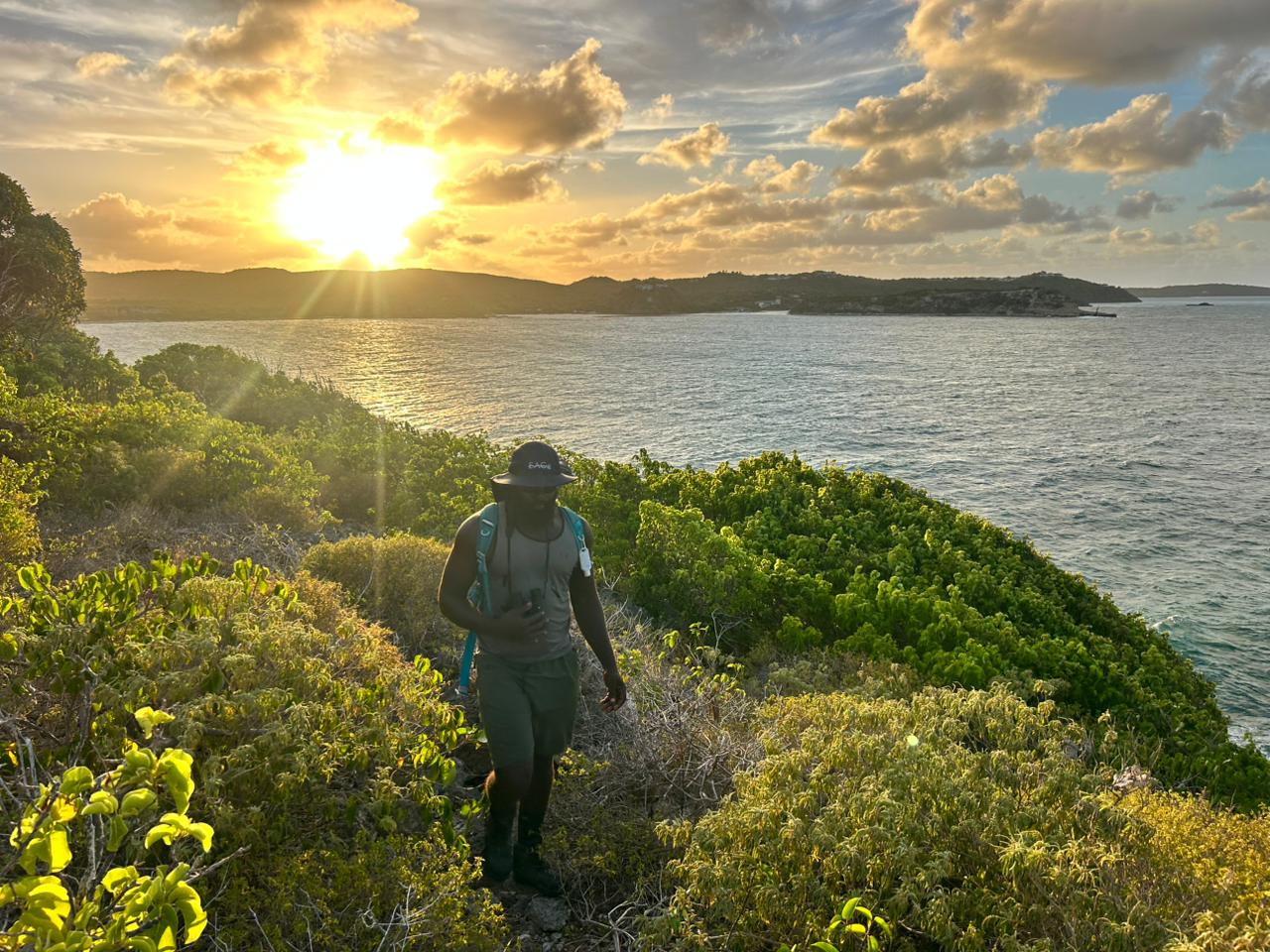
Shanna Challenger, Offshore Islands Conservation Programme (OICP) Coordinator at the Environmental Awareness Group, made the call on Thursday, International Day of Biological Diversity, as she headed out to Great Bird Island to continue survey work on the Antiguan racer snake.
Challenger said the country’s tourism product already includes world-class biodiversity experiences, but that the focus has remained too narrow.
“Our ecotourism right now focuses a lot on the marine space, but there’s also a lot of opportunity with our terrestrial space,” she said.
She pointed to the Barbuda warbler, the country’s only endemic bird, as a prime example of an untapped draw, saying international birders regularly contact her seeking access to the species, which cannot be found anywhere outside Barbuda.
“I have birders who reach out to me like, ‘hey, I am just passing through Antigua, not really studying that, but I need to get to Barbuda because I need to see this bird,” Challenger said.
She added that discussions are already underway with the Ministry of Tourism and the Antigua and Barbuda Tourism Authority about the potential of birding tourism, and noted that the country’s biodiversity offer extends well beyond birds, encompassing the Antiguan racer, one of the rarest snakes in the world, the Magnificent Frigate Bird Sanctuary in Barbuda, stingray encounters, and sea turtle nesting sites.
Central to expanding that offer, Challenger argued, is ensuring that frontline tourism workers are equipped to speak knowledgeably about the country’s wildlife.
“Getting more taxi drivers and tour guides so that they not just talk about the history — they can also talk about the kinds of wildlife that we have in Antigua and Barbuda and why it’s important,” she said. “I think it’s really important to just normalise and maximise as many people that know about these species.”
The EAG is taking a direct step in that direction, with an ecotourism guide training scheduled for the end of May. The programme is open to tour guides, hospitality workers, and members of the public who wish to develop their ability to engage visitors on environmental topics.
The call comes as the EAG marks this year’s International Day of Biological Diversity under the theme “Acting Locally for Global Impact,” a theme Challenger said sits at the heart of the organisation’s work.
She noted that Antigua and Barbuda has already distinguished itself internationally through its rewilding efforts, clearing rats and mongooses from 16 offshore islands and reintroducing the Antiguan racer to three additional islands, and said that continued local action has regional and global significance.
“By doing this work on the local level and making sure that in Antigua and Barbuda we are making an impact, we’re also doing it on a global scale,” Challenger said.
Those interested in the ecotourism guide training or in supporting the EAG’s conservation work can contact the organisation at 462-6236, by email at or via Instagram at EAG Antigua.