By Algernon Watts
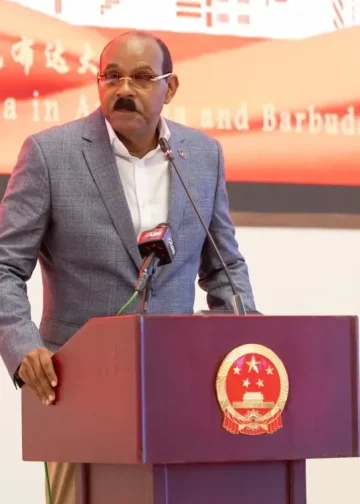
Prime Minister Gaston Browne says the government is considering drawing up to $60 million from the Treasury and public-sector institutions to help finance two proposed 150-room hotels at Jolly Beach and Yeptons, raising questions about the potential risks and returns for the institutions involved.
The proposals are expected to go before Cabinet on Wednesday, 28 October, as the administration considers a greater role for domestic investors in the tourism sector.
Browne identified the Treasury, State Insurance, Social Security and the Antigua and Barbuda Airport Authority as potential sources of financing, arguing that the government could assemble the initial funds without relying entirely on foreign investors.
He suggested that the Treasury could provide between $10 million and $20 million, State Insurance another $10 million, Social Security between $10 million and $20 million, and the Airport Authority a further $10 million. The proposed contributions would total between $40 million and $60 million, depending on the amounts committed.
“I can pick up the phone Monday morning and raise $60 million,” Browne declared, adding that the money could be invested in a viable project.
The proposed use of funds held by public institutions raises questions, particularly in the case of Social Security, which manages contributions and pays benefits to insured workers, pensioners and other beneficiaries.
Browne did not specify whether the institutions would take equity stakes in the hotels or provide loans, nor did he outline the expected financial returns. He also did not say whether their governing boards had been approached or formal investment assessments completed.
The Prime Minister said one hotel could be built on land in the Greenfield area at Jolly Beach, with the other planned for Yeptons.
He said the government had acquired land at Yeptons through an arrangement with Global Bank aimed at reducing an outstanding government liability. Part of the property was subsequently sold to developer Patrice ‘Baba’ Luke for a hotel project.
Browne disclosed that Luke had been contacted on Friday about partnering with the government and other agencies on a larger development of approximately 150 rooms. He said the developer had expressed interest.
According to Browne, private investment of between $20 million and $30 million could supplement the public-sector funds, potentially bringing the total available for the two projects to approximately $80 million or more. Other private investors and borrowing could help cover any remaining financing gap.
Browne said the government wanted to expand domestic ownership of tourism properties rather than continue depending primarily on foreign investors. He criticised the repatriation of profits from foreign-owned developments, arguing that local ownership could keep more earnings in Antigua and Barbuda.
“Rather than waiting on foreign ownership and having this extractive economy in which the proceeds or the profits, for that matter, are repatriated, let us expand domestic ownership and keep the profits here,” Browne said.
The financial viability of the proposed hotels has yet to be established. Browne said Cabinet would assess the proposals and their viability on Wednesday, and expressed hope that, if approved, the projects could be completed within approximately two years.
Any participation by Social Security would need to be considered alongside its responsibility to meet pension and other benefit payments. The proposed involvement of State Insurance and the Airport Authority also raises questions about how hotel investments would fit their financial obligations and investment strategies.

Government weighs up to $60 million in public funds for two hotels