Teachers Union – By Kisean Joseph
Teachers Union President Reflects
One hundred years of advocating for educators has taught the Antigua and Barbuda Union of Teachers (A&BUT) that progress is a journey, not a destination, and that the work of building a world-class education system is far from over.
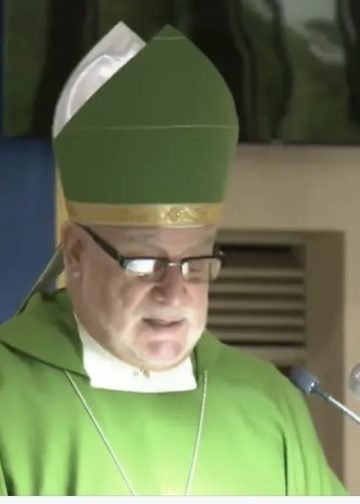
That is the reflection of Casroy Charles, President of the A&BUT as the organisation marks a century of service to the nation’s educational landscape.
“We have learned that it’s a journey and not a destination,” Charles said. “We have learned that we must inculcate trust, engage in good conflict, hold each other accountable, and then analyse the results that we would have garnered within our existence.”
He added the union’s centennial milestone is not merely an occasion for celebration, but a moment to assess where the organisation stands and identify the gaps that continue to hold it back from reaching its fullest potential.
Charles acknowledged that the teaching profession itself has undergone a significant transformation over the decades. Where once it resembled a mentorship model, drawing the most academically successful students back into classrooms to guide the next generation, the profession today demands a far more deliberate and structured skills set.
“In order to be a teacher in this day and age, it requires teachers to regularly upskill themselves because, as we know, the world is changing,” he said.
He noted that modern educators must now possess both deep content knowledge across multiple disciplines and the pedagogical tools to deliver instruction suited to each individual student. They must also be equipped to identify and address the learning barriers that prevent students from accessing knowledge.
Charles framed this evolution within the broader context of Antigua and Barbuda’s place in the world, arguing that the country’s educational offerings must be designed to produce graduates capable of competing globally.
Reflecting on the legacy of colonialism, Charles acknowledged that the country’s educational system was historically among the weakest in the British Empire, a consequence of an era in which enslaved ancestors were deliberately denied access to literacy. He said much has been done to address that deficit but cautioned that too many students continue to take the present-day opportunity for granted.
“Education is the vehicle to social mobility,” he said. “If we don’t realise the potential of education and also grasp with both hands the opportunities that we’re given, we can see the standard of living that we experience now diminish.”
He called on parents to approach disagreements with teachers through dialogue rather than confrontation, describing mutual respect as essential to the shared mission of nation-building.
“If we are true to the task in terms of building a better nation, we must respect each other and dialogue so that we can turn our disagreements into agreement,” Charles said.
As the A&BUT marks its centennial, Charles said the union’s ambition remains unchanged: to position Antigua and Barbuda’s education system as the best in the Caribbean and beyond.