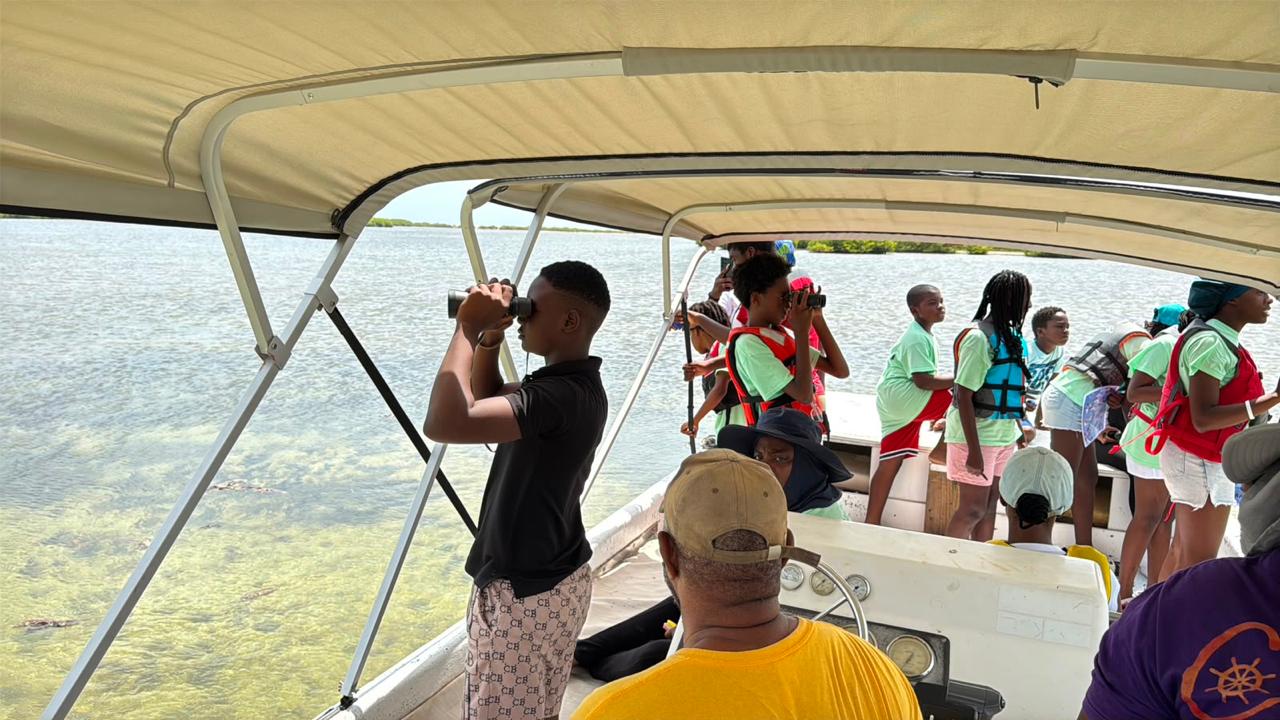
Twenty-six Barbudans aged 10-16 traded their classrooms for coastlines from July 25th to July 31st, when The Blue Halo Ocean Camp transformed the island into a living laboratory by introducing the youth to the sea through scientific lens.
Blue Halo Ocean Camp
This camp, part of BarbudanGO’s wider environmental theme: Helping our community journey to be a place where citizen science lives, was designed to put that vision into action — by getting young people in the water, collecting data, and seeing themselves as stewards of their home.
The mission was clear: help Barbuda’s next generation understand the three marine ecosystems right in their backyard — mangroves, seagrass beds, and coral reefs — and see how climate change is already shaping them. With the Codrington Lagoon National Park designated as both an MPA and a Ramsar Site, campers learned they aren’t just living near something special. They are living inside it.
“Every day was about connection,” said a BarbudanGO coordinator. “Connection to the water, to the science, and to the role these young people can play in protecting it.”
The week was packed with field work and expert guidance. Campers explored mangroves and seagrass beds with marine scientist Robyn Browne from the Department of the Blue Economy, learning how these habitats store carbon, protect coastlines, and nurse young fish.
Senior Fisheries Officer Roy Morris led them through the Ramsar Site and Codrington Lagoon National Park, breaking down what protected status really means and why it matters for fisheries, birds, and the whole island.
With Auriel Horsford-Hunt an Environmental Awareness Group volunteer, they studied sea birds, learned about their relationship to the ecosystem, and even took part in a mock bird census.
Not only did the participants board boats to inspect catch from the fishers and capture real data, they got a firsthand look at sustainable fishing practices, and received practical experience by actually holding a line in the water.
Throughout the camp, one underlying message stayed front and center: ‘you have a role to play’. Whether as a scientist, a fisher, a conservationist, or a community leader, the campers were shown possible future career paths in the local blue economy.
It proved to be an empowering undertaking and BarbudanGO extends appreciation to all the stakeholders who made Blue Halo possible. Special Mention goes to the funders and partners: WAIIT Foundation, GEF Small Grants Programme, and ProCaribe+.
The camp closed on a high note with campers leaving with data sheets, new questions, a deeper pride in the three waters that sustain Barbuda, along with photos and sunburns.
The Blue Halo is not just around Barbuda. It’s in these young people now — and in a community that’s learning to do science, together.