Police Training – By Kisean Joseph
Police Training Conditions Need
A former Commissioner of Police is calling for a sweeping review of the conditions under which police recruits are trained locally, arguing that several practices are outdated and out of step with modern policing standards.
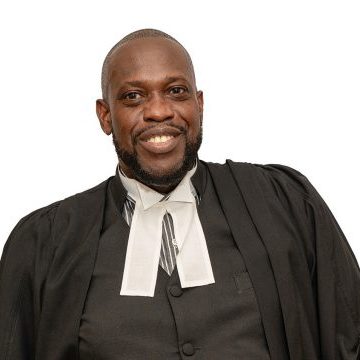
Wendell Robinson Alexander, currently a criminal defense attorney, made the remarks while reflecting on public complaints circulating on social media from recruits who say they have been cut off from their families during training.
Alexander acknowledged that a degree of rigor is essential to the training process but insisted that the current model requires adjustment.
“The training has to be rough, but the training has to be tempered as to what should be done in the 21st century,” he said.
He argued that the primary objective of training is to allow the Commissioner of Police to determine whether a recruit is a “fit and proper” candidate before being deployed to serve the public. However, he believes that the goal can be achieved without prolonged family separation.
Pointing to regional examples in Barbados and Jamaica, Alexander noted that recruits in those countries are given limited but structured access to their phones and family members after daily training sessions conclude. He suggested that locally, recruits should, at a minimum, be granted a weekend pass after the first three to four weeks of training.
He also recalled the approach of a former commandant, who made it a deliberate policy to allow female recruits periodic time away from the training school — a practice Alexander described as “very wise”.
“Nature will call,” he said plainly.
Beyond family access, Alexander raised concerns about the sequencing of physical training. He said the current practice of starting recruits at maximum intensity, without accounting for varying fitness levels, is a recipe for preventable injuries. He noted that during his tenure as Commissioner, he personally directed instructors to scale training progressively.
“The training is supposed to take a leap forward, so you don’t start at the highest peak since everybody’s level of fitness is not the same,” he said.
Looking beyond physical conditioning and discipline, Alexander called for expanding the six-month training curriculum to include customer service, public relations, and basic Spanish-language instruction. He said an increasing number of Spanish-speaking residents and visitors are arriving at police stations and being treated, in his words, as “second-class citizens” because officers cannot communicate with them.
It is a gap Alexander said he personally bridged — confirming that he learned Spanish to address the very problem he is now flagging.
He urged authorities to revisit the training program comprehensively, suggesting that the force begin with a more measured approach and raise the bar gradually — rather than leading with the most demanding requirements from day one.