Senate Passes – By Jeressa Jeremy
Senate Passes Festivals Commission
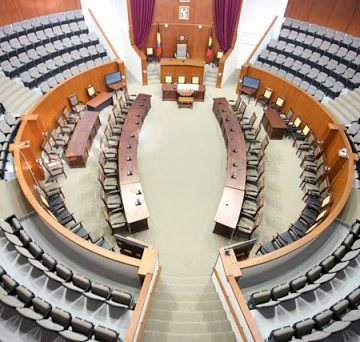
In its final official act before the Parliament is dissolved for the upcoming general elections, the Senate approved two major pieces of legislation on Tuesday. The passage of the Antigua and Barbuda Festivals Commission Bill 2026 and the Special Economic Zone (Amendment) Bill 2026 clears the legislative desk as the country prepares to head to the polls.
The session began with the Festivals Commission Bill, which aims to modernize national events like Carnival by making the Commission a “body corporate.”
Leader of Government Business, Senator Shenella Govia, argued that the Bill is a necessary step for accountability.
“What this Bill is seeking to do is one very important thing: it’s to place the management of our national festivals on a modern, more legal, structured, and accountable footing, similar to the Tourism Authority,” Senator Govia stated.
She explained that the new structure allows the Commission to handle its own money through a dedicated fund, ensuring faster payments to service providers. Govia noted that the national festivals provide opportunities for “entrepreneurs, taxi drivers, and vendors” and that the Bill provides a legal framework to protect these interests.
However, Minority Leader Senator David Massiah questioned the speed of the process and the lack of inclusion. He argued that the move was being rushed without talking to the people who work in the industry.
“The consultation process could have actually meet this,” Massiah argued. “Because we’re talking about a wide sector. We’re talking about a lot of stakeholders who have gripes, who have concerns. And it would make the process, I mean, transparent enough for people to understand.”
Massiah also expressed frustration with the timing of the documents, noting that the opposition only observed the Bills via email on Sunday and did not have enough time for research.
Senator Michael Freeland, Deputy Chair of the Festivals Commission, supported the move, arguing that the Bill is necessary because the current system was failing. He defended the expertise of the board, stating they are individuals with “superb experience for national events” and that the country cannot afford to wait.
“We are competing against the rest of the world,” Freeland said. “We don’t have any time to be waiting and wasting while the rest of the world is trotting on.”
The Senate then focussed on the Special Economic Zone (Amendment) Bill 2026, with Senator Govia stating: “The Special Ezone — they are powerful tools for national development, Madam President. They stimulate our infrastructure, exports, logistics, services and innovation. This is a vital safeguard and it tells us clearly that the State does not surrender its lawful authority because activity takes place within the Special Economic Zone. These economic zones are not to be treated as legal blind spots or soft regulation areas … they must be treated and designed from the onset to safeguard against any illicit finance and abuse, Madam President.”
However; Senator Massiah questioned why certain administrative powers were being centralized under the Minister rather than technical staff. “Why is it that we find giving it to the minister? Why not leave it to the Permanent Secretaries?” Massiah queried.
“Would the minister have the time to deal with a lot of these mundane day-to-day activities that are going to be required in these kinds of things?” Massiah argued that such authority “leaves the window open for a minister to give preferential treatment to an operator.”
Senator Michael Joseph supported the Bill, focusing on the preservation of national sovereignty and the chain of command for public officers.
“No Customs officer shall take any instructions from the operators of the zone. It makes it absolutely clear Madam President that those Customs officers… they fall under the supervision and discipline of the Customs Department of Antigua and Barbuda, which falls under the Ministry of Finance,” he stated.
He later addressed the concern that these zones would operate outside the law, asserting: “It’s not a legal blind spot Madam President. It’s not a case where the state has surrendered its authority to allow for persons to engage in activity that would otherwise be deemed as illicit or illegal. It simply provides for a framework where we can have specialized economic activity.”
Meanwhile, Senator Knacyntar Nedd-Charles, who is the Government Senator and representative for Barbuda, added that the Bill should alleviate public fears regarding the autonomy of these zones. She stated:
“This amendment is to ensure that we do not have a country within a country, but that the laws of Antigua and Barbuda are respected and that the statutory power remains with the state and is not transferred to any private operator.”
As the session drew to a close, Senator Govia reflected on the intensity of the day’s proceedings, noting that while debates can be “quite robust and quite spirited,” it remains a “privilege to serve in this honorable house.”
She thanked her colleagues for the energy they brought to the work of the people.
Senator Nedd-Charles shared similar sentiments, stating she was “proud of the work we have done in this session” before looking ahead to the Easter break. She wished the chamber a safe recess, expressing hope that members would return with the “same vigor to move the business of the people forward.”