Resolution Declaring – By Kisean Joseph
Resolution Declaring Slavery Gravest
Antigua and Barbuda’s Reparations Support Commission has warmly welcomed a landmark United Nations resolution declaring the transatlantic trafficking and chattel enslavement of Africans as the gravest crime against humanity, describing the decision as historic, timely, and necessary.
The Ghana-led resolution was adopted by the UN General Assembly on March 25th— the International Day of Remembrance of the Victims of Slavery and the Transatlantic Slave Trade — receiving 123 votes in favour. The United States, Israel, and Argentina voted against it, while 52 countries, including the United Kingdom and all 27 European Union member states, abstained.
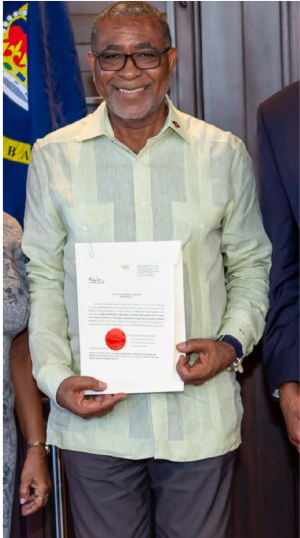
Vice-Chairperson of the Antigua and Barbuda Reparations Support Commission, Anthony Liverpool, said the resolution carries significant weight for the region’s long-standing push for reparatory justice.
“This declaration is historic. It’s timely, and it’s a necessary decision,” Liverpool said.
He noted that all CARICOM member states supported the resolution, which calls for reparation frameworks, remembrance, research, education, healing, and justice.
Liverpool was keen to situate the resolution within a broader historical struggle, one he says did not begin at the United Nations.
“Our ancestors really started the struggle,” he said, pointing to King Court’s planned revolution in Antigua and Barbuda in 1736, Toussaint Louverture’s successful uprising in Haiti, and the Maroons of Jamaica, who, he said, refused to accept enslavement.
“As generations of our ancestors, we have built — we are building — our protest and our advocacy on the backs of those people who never accepted chattel slavery and fought for 300 years to overcome it. We are just continuing that struggle.”
Liverpool traced the institutional dimension of that continued struggle through several milestones — the 2007 commemoration of the 200th anniversary of the British Empire’s Atlantic Slave Trade, and the 2013 establishment of the Caribbean Reparation Commission by CARICOM governments.
He cautioned, however, that advocates should not mistake the resolution for a finish line.
“Our call for reparatory justice is not a sprint. “It is a marathon,” he said, adding that the resolution would serve as an important awareness-building tool in efforts to bring European governments to the negotiating table.
Liverpool also pointed to the health and economic consequences of chattel slavery as evidence of its enduring legacy, arguing that the Caribbean’s disproportionate burden of non-communicable diseases is no coincidence.
“It’s not a mistake that we have the highest incidence in the world of people with hypertension, blood pressure, and people with diabetes,” he said. “It’s costing the government of Antigua and Barbuda millions of dollars annually to provide medication for those of us who are suffering from hypertension and those of us who are suffering from diabetes.”
He said those health outcomes affect workforce productivity and shorten lives, compounding the economic implications of a legacy that continues to shape Caribbean society.
Liverpool added that, should diplomatic efforts fall short, the resolution could also serve as a legal function. “When the time comes, and if it becomes necessary for us to take these countries to court for justice, that becomes an added tool that we can put on the table,” he said.
The Commission says it will continue pressing European governments to engage in meaningful dialogue on reparatory justice